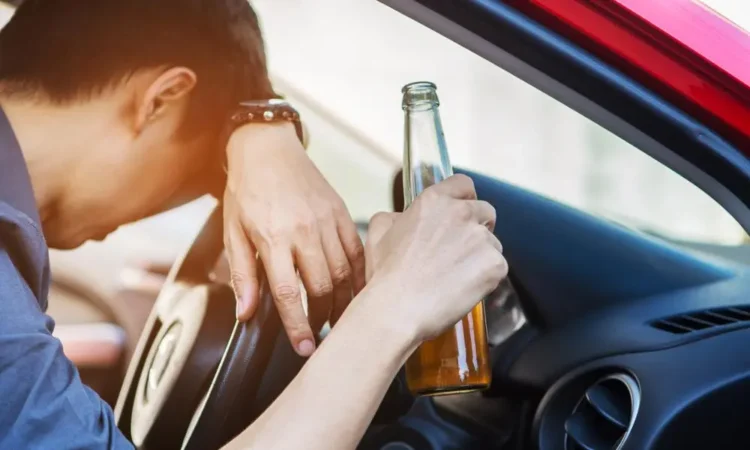
A drunk driving accident in NYC can turn into a legal nightmare almost overnight. Not only do you have to deal with physical injuries, psychological scars, and financial ramifications, but also potential criminal charges. New York takes drunk driving accidents very seriously, and charges can range from simple misdemeanors to serious felonies. Understanding when, where, and how criminal charges may apply is important to successfully navigate the situation. At Alex Yadgarov & Associates, we help our clients make sense of the legal process during what is potentially one of the most stressful experiences of their lives. In this post, as an accident lawyer in NYC, we’ll break down the criminal charges connected with drunk driving accidents and what it means for your compensation claim.
How Does New York Classify Drunk Driving Offenses?
In New York, drunk driving offenses are classified based on the blood alcohol content (BAC) of the driver, the type of vehicle driven, and the existence of prior convictions. As such, the categories of offenses are as follows.
Driving While Ability Impaired (DWAI)
A person is guilty of DWAI when their BAC is between 0.05% and 0.07%. Since it’s a traffic offense, it carries penalties such as fines and license suspensions.
Driving While Intoxicated (DWI)
When the person has a BAC level of 0.08% or higher or exhibits clear signs of physical intoxication. A first-time offense is usually considered an unclassified misdemeanor, while second and third convictions within 10 years are classified as Class E and Class D felonies, respectively.
Aggravated Driving While Intoxicated (AGG DWI)
When a person drives with a BAC level of 0.18% or higher, it can be considered an AGG DWI. The first offense carries a mandatory fine between $1000 and $2500 and can include a maximum jail sentence of one year. The driving license of the at-fault driver can be revoked for at least one year.
The second charge within 10 years is a Class E felony and carries a mandatory fine between $1000 and $5000 and a mandatory 4-year jail sentence. The driving license can also be revoked for at least 18 months. The third charge within 10 years is a Class D felony. It carries a mandatory fine between $2,000 and $10,000, a mandatory 7-year jail sentence, and license revocation of at least 18 months.
Commercial and Zero-Tolerance Offenses
Since commercial motor vehicle operators have a heightened responsibility, they are considered intoxicated when their BAC level is 0.04% or higher. If a driver under the age of 21 is found with a BAC level of 0.02% – 0.07%, the state’s Zero Tolerance Law will apply to issue administrative penalties.
How Can Criminal Charges Affect Your Civil Compensation Claim?
In New York, when you’re injured in a car accident, you may be entitled to compensation. Compensation is primarily obtained through a person’s Personal Injury Protection (PIP) coverage. Through a person’s PIP coverage, they can claim up to $50,000 for medical expenses and lost wages. Since New York is a no-fault state, this compensation is awarded, regardless of fault. As such, the criminal charges will not have a direct impact on your insurance compensation. However, insurance adjusters will use it as a way to try and get you to agree to a lower settlement.
However, the criminal charges will have a direct impact on compensation when you step outside the no-fault system. A drunk driver can still file a personal injury lawsuit to claim compensation for non-economic damages.
Since the drunk driver will be partially at fault for the accident, New York’s pure comparative negligence rule will apply. Under this rule, a person can claim compensation, even when they are 99% responsible for the accident. However, the compensation they claim is reduced by the fault percentage of the accident assigned to them.
For example, A is injured in an accident and is now claiming $100,000 in compensation. However, A is charged with his first AGG DWI charge and is held 90% responsible for the accident. Under the pure comparative negligence rule, in this example, A’s compensation will be reduced by 90%, meaning A will only walk away with $10,000.
What Should I Do After a Drunk Driving Accident?
Being the victim of a drunk driving accident can be a traumatic experience. If you ever find yourself in an accident, call 911 and seek proper medical attention. Your health and well-being should be your number one priority.
Try to remember as many details as possible. Take photographs and videos, or note down what you can remember. If you’re able, gather evidence from the scene itself. The witness statements, vehicle license plate numbers, and contact information will be crucial for future proceedings.
Conclusion
If you or your loved one has been injured in a drunk driving accident, Alex Yadgarov & Associates is here to help. As an experienced accident lawyer in New York, we will fight for your rights and get you the compensation you deserve. If you’re ready to get started, get in touch with us today and schedule your free and confidential consultation.